- Expeditions
By Region
By Month
By Grade
By Height
- Treks
By Region
By Month
By Grade
By Height
- UK & Alpine
By Category
By Grade
- Schools
- Hire
- News
- Shop
Clothing
Footwear
Equipment
Expedition

- Contact

Climb Mount Kilimanjaro - Northern Circuit Route
From £3,050 Altitude 5,895m Grade: T4
Climb Mount Kilimanjaro - Northern Circuit Route
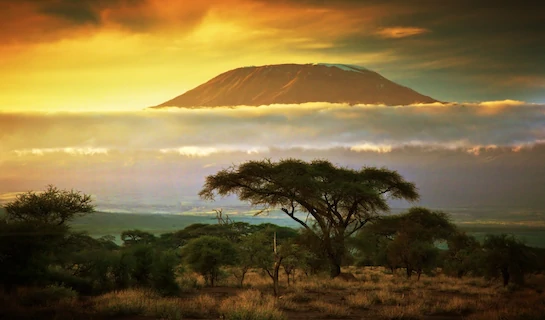
The Kilimanjaro Northern Circuit Route is perhaps the best route offering 9 mountain days for better acclimatisation, stunning scenery and a quitter climb. The Trek almost completes a 360-degree journey around Kilimanjaro as you ascend the mountain, including the quieter and rarely visited northern slopes. With better acclimatisation time it also gives the highest success rates. The only issue with trekking this route is the extra time and cost!
The route approached Mount Kilimanjaro from the west; the first two days are spent trekking through the rain forest to Shira Ridge, before crossing the Shira Plateau. The route then heads north and circles clockwise using Moir Camp, Buffalo Camp and the School Hut camp before summiting from the east. Descent is via the Mweka route.
PREVIOUS EXPERIENCE/FITNESS
If you are used to regular multi day mountain walking of 6-8hrs, you will have the right level of fitness to fully enjoy your time on this trek. Previous walking experience is not essential but will help you get the most out of this trip. Non hill walkers must come with a good degree of fitness, and we would recommend attending one of our weekend training meets to fully assess your fitness. Most days are relatively short, but the summit involves a long day starting around midnight.
Participation Statement
Adventure Peaks recognises that climbing, hill walking and mountaineering are activities with a danger of personal injury or death. Participants in these activities should be aware of and accept these risks and be responsible for their own actions and involvement.
Adventure Travel – Accuracy of Itinerary
Although it is our intention to operate this itinerary as printed, it may be necessary to make some changes as a result of flight schedules, climatic conditions, limitations of infrastructure or other operational factors. As a consequence, the order or location of overnight stops and the duration of the day may vary from those outlined. You should be aware that some events are beyond our control and we would ask for your patience.
GROUP AND LEADERS
A fully qualified UK leader will accompany larger groups. The leader will work alongside a team of local guides, assistant guides, porters and cooks who work very hard to make the whole experience as enjoyable as possible. Smaller or private groups will be led by our regular English-speaking Tanzanian guide. This trip is exclusive to Adventure Peaks.
WEATHER
Being close to the equator, Kilimanjaro does not really experience summer and winter. However there are two wet seasons (April / May and November) during which we do not trek. If you travel soon after the end of a wet season you can expect snow on the summit and wet conditions underfoot on the lower slopes. The higher you are the cooler it will be. Even though clear skies and views over the clouds below are normal, you must remember that weather in high mountains is unpredictable and should be prepared for this. It will be cold on the early starts and in the evenings at altitude. August is usually the coldest month.
WHAT TO CARRY
This trek is fully supported by a team of porters who will transport your main baggage. You will only need to carry a light daypack at the very most. A 30l rucksack is a useful size to comfortably fit in essential items such as water bottle, camera, wet-weather gear and extra layers etc.
CATERING ARRANGEMENTS
Food on the trek is excellent and designed to stimulate your appetite and keep you going despite frequent altitude induced loss of appetite. Breakfast can include porridge followed by sausage & eggs (fried or omelette) and either bread or chapattis with jam, honey, peanut butter etc. A sample lunch may consist of sandwiches, boiled eggs, chicken legs, biscuits, fruit etc. You usually arrive at the camp around lunchtime or mid-afternoon for tea, biscuits and fresh popcorn. The evening meal always starts with soup followed by a huge variety of main courses – pasta, rice, chips with various sauces. Fresh fruit tends to be served for dessert. You should not be hungry! Vegetarian and Vegan food can be provided.
ACCOMMODATION
In Moshi you will stay in a 3* hotel in a quiet part of town. Twin, double or single rooms (supplement applies) are available. On trek you will be in two-person tents. Single tents are available for a supplement. We have our own toilet tents with portable flush toilet tents on a ratio of 1:4. Warm washing water will be supplied.
LANGUAGE AND TIME
Language: Swahili and English
Time: GMT+3 (CET). No daylight-saving time at present.
HEALTH
All our UK leaders hold first aid certificates and carry a fully equipped first aid kit for medical emergencies. However, you should bring your own supplies of plasters, blister prevention pads (Compeed), paracetamol etc. and any medication you are taking. Contact your GP around eight weeks before your trip to check whether you need any vaccinations or other preventive measures. There are no compulsory vaccinations for Tanzania but the following are usually recommended: Hepatitis A, Tetanus, Typhoid and possibly Rabies, Hepatitis B, Cholera,
There is no malaria above 1800m on Kilimanjaro, but there is a risk before and after you trek so suitable prophylactics should be taken. Consult your GP or a vaccine specialist for professional advice or refer to this website: https://www.nhsinform.scot/healthy-living/travel-health/travel-health-and-vaccinations/. There are other diseases which can be caught from biting insects and Dengue can be caught from mosquitos. The best course of action is to avoid being bitten.
Tap or stream water should never be drunk without first sterilising or by boiling. Please note that disposable plastic bottles are not permitted on the mountain and park rangers can issue fines for this, so bring Nalgene bottles or similar.
Information on whether or not a Yellow Fever certificate is required should be checked on https://www.gov.uk/foreign-travel-advice/tanzania/entry-requirements. You must have one if you are entering from a country with a risk of Yellow fever transmission, or if you are travelling to Zanzibar.
INSURANCE
Insurance which covers mountain rescue, evacuation and medical expenses is essential. Evacuation may be by land or by helicopter. We will require a copy of your insurance prior to departure. Please also ensure your insurance covers you for walking above 4000m (some will exclude this option).
ALTITUDE
If this is your first trip to altitude you may have concerns about the effect Don’t worry, our itineraries allow sufficient time to acclimatize. At worst you may experience a headache or a little breathlessness, the best way to avoid such symptoms is to do everything slowly, walk at a gentle steady pace and drink plenty of fluid. Should you be the exception, we can allow you to stay an extra night at a lower level and follow with one of our local guides.
USEFUL TIPS
Just in case your main luggage goes missing en route, it is a good idea to wear your boots on the plane. Most other things can be replaced but comfortable, well worn-in boots cannot. Pack important items in strong plastic bags.
EQUIPMENT
A detailed equipment list is provided on booking but normal winter walking equipment is all that is required, together with a down jacket and a four-season sleeping bag which can be hired from us. For equipment purchases Adventure Peaks offers a 15% discount off the RRP from our shop in Ambleside or online.
BAGGAGE
For your own comfort, travel light. Normally airlines restrict baggage to 20kg and on trek the weight for mules and porters should be kept to 15kg, (you will be wearing boots and one set of trekking clothes). Some items can be left at the hotel for your return.
VISAS AND PERMITS
A Single Entry Tourist Visa costs approx. £40 if you obtain your visa in advance from the Tanzanian High Commission in London. Details of how to obtain your visa will be sent before your trip. It costs $50 on arrival ($100 for US citizens).
LOCAL COSTS
All accommodation and most meals are included; please see the itinerary page for full details. Additional costs would include any drinks or snacks outside of mealtimes, tips for local staff and personal spending.
CURRENCY
The currency in Tanzania is the Tanzania Shilling (TZS) but you cannot obtain these outside of Tanzania; therefore take UK sterling, Euro or US$ and exchange on arrival. Don’t try and change money in the street in Tanzania as it is illegal. ATMs and change bureaux are available in the arrivals hall at the airport. The US$ is widely accepted and we suggest you bring some in cash with you, ensuring you have some small denomination notes.
TREK STAFF BONUSES
Staff Bonuses or ‘Tips’ for the porters and support staff are an accepted and expected part of life in Tanzania. Our teams generally pay these bonuses to our trek staff as a whole, and would recommend around US$200 per client, depending on group size and length of trip. Details will be sent to you with your Final Joining Information. Tipping in hotels and at meals is normal practice.
ADVENTURE PEAKS KITBAG
We provide an appropriately sized kit bag which is sent out around 8-10 weeks before departure.
FLIGHTS AND JOINING ARRANGEMENTS
Within the published ‘With UK flight’ price of your trip is an element we have allowed to cover the cost of flights, which is the difference between the ‘Land Only’ and the ‘With UK flights’ prices. This element is for a non-changeable, economy ticket on flights between LONDON and the destination city, using an airline that, in our experience, offers the best combination of cost, routing, flexibility and baggage allowance. It is stated in good faith and is based on research and costs in previous years,but is subject to change. Whatever flight you take, you will be met at the airport and transferred to the hotel (supplement will apply for airport transfers separate to the group).
The rendezvous for this trip is the ARRIVALS HALL AT KILIMANJARO AIRPORT when your flight comes in on Day 2. You will meet other members of the trekking group at the airport or in the hotel.
PLEASE ENSURE YOU DO NOT PURCHASE YOUR INTERNATIONAL TRAVEL (FLIGHTS OR OTHER) UNTIL WE HAVE GUARANTEED YOUR TRIP IS RUNNING


Dates & Prices
Availability
* A deposit of £400 will be required at checkout.
** Flight prices are estimated and will be confirmed prior to final payment.
Payment Schedule:
Initial Deposit as quoted above upon booking
Interim Deposit £400, due 4 months before departure
Final Balance due 10 weeks before departure
Extras
Extras can be added per-person when you book onto a date
| Item | Price | Days | |
|---|---|---|---|
| Mount Meru ascent | £1,080 | +4 days | |
| Three-Night Mykomazi Safari | £2,130 | +4 days |
* A deposit of £200 (or the full extra price, whichever is lower) will be required at checkout for each extra added per-person on this trip
What's Included
- Pick-up and drop-off at Kilimanjaro International Airport.
- One Group transfer to and from the trailhead – entry/exit gate to Kilimanjaro National Park.
- All Park fees collected by the Kilimanjaro National Park (conservation fees, camping fees, crew fees, vehicle fee, rescue fee and all other fees collected by the Tanzania National Parks Authority).
- Accommodation: Two hotel nights (DBB)on a twin/double room, one before the expedition and another night after with reliable Wi-Fi, restaurant and swimming pool. single room/tent a supplementary fee would apply
- Camping tents on Mount Kilimanjaro 3-person tent for 2 people. Single Tents available at an extra cost.
- All meals on the hike. Our Kilimanjaro diet includes energy-rich and highly nutritious meals prepared by our professional high-altitude cooks. A typical diet on Kilimanjaro includes different soups, garnishes, several types of fish and meat, fresh fruit and vegetables; vegetarian/gluten-free/halal options are available at no extra cost. All drinks on the hike (coffee, tea, hot chocolate and water).
- Comfortable sleeping mats.
- All group equipment (spacious and comfortable dining tent, camping table and chairs, crockery and cutlery).
- Emergency Oxygen cylinders and oximeters.
- Medical kits.
- VHF handheld radios – Carried for easy communication between guides, camp manager and office.
- Professional guides, licensed by Kilimanjaro National Park. All our guides are the holder of Wilderness First Responder or Wilderness First Aid certifications.
- Dedicated support crew (Guide, assistant guides, camp master, porters, cooks, etc.).
- And most important our own portable flush toilets on a ratio of 1:4 client
What's Excluded
- Flight tickets unless booked as flight inclusive
- Visa fee.
- Lunch in hotel
- Personal gear rentals.
- Tips for the local mountain crew.
- Mountaineering insurance.
Itinerary
Day 1-2 | Arrive in Moshi, Kilimanjaro Flight to Kilimanjaro International airport, on arrival you will be met and transferred to our hotel in Moshi town. The hotel will provide all the essentials for a classic stay: cozy rooms, hot water, polite staff, a swimming pool, and Internet access. In the evening, or the next day in the morning there will be a briefing with our guide, who will ensure you are ready before the hike. Note: Check-in starts at 12:00 PM (D) |
Day 3 | Trekking from Lemosho 2100m Gate to Mti Mkubwa Camp 2780m Our support crew will arrive at the hotel in the morning for a final briefing, after which you will travel by vehicle (roughly 2-3 hours) to Kilimanjaro National Park's western entrance: Lemosho Gate (2,100 m). After the quick formality of acquiring climbing permits and registering with the search and rescue service, the group will start trekking through the rainforest towards the first camp of the route: Mti Mkubwa Camp (2,780 m). By the time you reach the camp, our mountain crew will prepare everything necessary, put tents and cook lunch for you. After lunch the group will depart on an acclimatization hike towards Shira 1 Camp that features a 300-meter gain in altitude to 3095m, after which you will hike back down to Mti Mkubwa Camp, where a hot dinner will be waiting. Elevation: Lemosho 2100m Gate to Mti Mkubwa Camp 2780m Note: The acclimatization hike is an easy trek with a slight gain in altitude done to speed up the acclimatization process. The acclimatization hikes help increase your chances of successfully climbing Kilimanjaro and reduces the reduces the risks of altitude sickness. |
Day 4 | Trekking from Mti Mkubwa Camp to Shira 1 Camp An early wakeup, breakfast, and a gradual trek upwards until 3,500 meters; at which point you will get your first views of Shira Plateau and Kibo Volcano. Overall, the passage from Mti Mkubwa Camp to our second high-altitude Shira 1 Camp (3,505 m) is quite straight forward and takes about 5-6 hours. This will allow you to start the acclimatization process gradually. Elevation: Mti Mkubwa Camp (2,780 m) — Shira 1 Camp (3,505 m) |
Day 5 | Trekking from Shira 1 Camp to Shira 2 Camp Departing from Shira 1 Camp (3,505 m) the trekking is again straight forward allowing us a relaxed journey towards Shira 2 Camp (3,900 m). You will be able to enjoy spectacular views of Africa and the unique flora of Kilimanjaro and the surrounding area. Shira 2 Camp is the best place on the trip to see Mount Meru (the fifth highest summit of Africa), weather permitting. When you arrive to camp you will have lunch, and after a two-hour rest everyone will complete an acclimatization hike towards Lava Tower Camp that again features a 300-meter gain in altitude. Elevation: Shira 1 Camp (3,505 m) — Shira 2 Camp (3,810 m) |
Day 6 | Trekking from Shira 2 Camp to Lava Tower and Descent to Moir Hut
After breakfast you leave Shira 2 Camp (3,810 m) and start trekking for the day towards the route's key feature: Lava Tower (4,630 m). This section of the route has a lot of up and down that end in a camp at over 4,600 meters. It is a tougher day, but it adds to our acclimatisation and we spend at least 1-2 hours having lunch at the Lava Tower. After lunch you will trek a little higher, after which there is a gradual descent to Moir Hut. This camp is located on the way to the northern part of Kilimanjaro. Note: If one or more participants feel sick, the group may refrain from passing the Lava Tower and adjust the route, following instead the road for porters. In this case you will not reach an altitude of 4,630 meters, getting up only to a maximum of 4,400 meters. Elevation: Shira 2 Camp (3,810 m) — Lava Tower (4,630 m) — Moir Hut (4,200 m) |
Day 7 | Trekking from Moir Hut to Buffalo Camp Today we cover more distance but at the same time it an easy trek day. After a short steep climb out of Moir Valley you will start going around the northern slope of Kilimanjaro and just like yesterday the path will be full of highs and lows, without any steep gains in altitude. This route passes close to the border with Kenya, so you will be treated to amazing views of the Tsavo and Amboseli Valleys. Elevation: Moir Hut (4,200 m) — Buffalo Camp (4,020 m) |
Day 8 | Trekking from Buffalo Camp to 3rd Cave Camp Today we head up Buffalo Ridge where the terrain becomes increasingly sparse. This route is rarely travelled, and you should a sense of wilderness rarely experienced on other Kilimanjaro routes. The trekking day will be shorter than on previous days, and your body will already have become completely acclimated to an altitude of 4,000 meters, which will contribute to your general feeling of well-being. Elevation: Buffalo Camp (4,020 m) — 3rd Cave Camp (3,870 m) |
Day 9 | Trekking From 3rd Cave Camp to School Hut Today we will reach the School Hut Summit Camp (4,750 m), in readiness for the summit bid. It is a relatively easy day of trekking which we take slowly to ensure you keep your strength up for the next day. When you reach the camp, we recommend you sleep well, avoid strenuous activity and drink as many fluids as you can, because tomorrow is the summit day! Elevation: 3rd Cave Camp (3,870 m) — School Hut (4,750 m) |
Day 10 | Trekking from School Hut to Uhuru Peak, and Down to Millennium Camp Very early in the morning (around midnight) we begin our push for Kilimanjaro's summit: Uhuru peak (5,895 m). Technically the climb is relatively simple; however, the most challenging part is the high altitude and environmental conditions; the wind and cold at this elevation and the time of day can be exhausting. We ascend in darkness for several hours. At Gilman’s point you will be rewarded with the most magnificent sunrise before continuing around the crater rim to Uhuru Peak – the highest point on Mount Kilimanjaro and the continent of Africa. After your successful ascent to Uhuru Peak, you descend straight down to the Millennium Camp (3,820 m) or Mweka Camp (3068m), stopping at Barafu Camp for lunch on the south side of Kilimanjaro. You will find Trekking poles extremely useful. Elevation: School Hut (4,750 m) - Uhuru Peak (5,895 m) - Millennium Camp (3,820 m) or Mweka Camp (3068m), |
Day 11 | Descent from Millennium Camp to Mweka Gate Our last day, we continue our descent through the rainforest to the Mweka Gate (1,640 m) park exit and the village below. A. A vehicle will met us for our drive back to the hotel in Moshi. Elevation: Millennium Camp (3,820 m) — Mweka Gate (1,640 m) |
Day 12-13 | Return International Flights (Sometimes flights used will get you back home the same day). Rest in the hotel and transfer to the airport. If you have booked a safari or a few days on sandy beaches and tropical waters of Zanzibar, we will help you with the transition. Meals (B) Note: Hotel check-out is at 11:00 AM. In case you need a late check-out because of an evening flight, there is the option to extend your hotel stay for an extra fee. |
Insurance
It is essential for a trip of this type that you are adequately insured. When researching insurance options, please ensure the policy covers you for the following:
- Cancellation or curtailment
- Helicopter rescue (most insurance companies will no longer cover for ‘search and rescue’ but providing you stay with the group, they will assist with ‘rescue’)
- Repatriation
- The altitude that you are expected to attain
- The location especially when travelling to Antarctica
- Grade of trek/climb/expedition
- Medical cover
 Adventure Peaks partners with Global Rescue to offer the world’s leading travel protection services. Medical and security emergencies happen. When they do, we rely on Global Rescue to provide our clients with medical, security, travel risk and crisis response services. Without a membership, an emergency evacuation could cost over $100,000. More than one million members trust Global Rescue to get them home safely when the unexpected happens. We highly recommend our clients enroll with Global Rescue, in particular for peaks over 7000m:
https://partner.globalrescue.com/adventurepeaks/
We are aware the following provide insurance:
For UK based clients:
Treks under 7000m - Campbell Irvine Direct : http://www.campbellirvine.com/AdventurePeaks
For Trekking Peaks under 7000m (such as Mera & Island Peak) ensure to contact them directly prior to purchasing a policy, including your trip itinerary to ensure your trip is covered
HCC Medical Insurance Services: LLC sales@hccmis.com Tel: 1-800-605-2282
Travelex Ins. Services: www.travelexinsurance.com Tel: 1-800 228 9792
True Traveller Ins: www.truetraveller.com Tel: 0333 999 3140 for treks including over 4500m
Austrian Alpine Club (UK) www.aacuk.org.uk Tel: +44 (0)1929 556870
Rothwell & Towler: www.world-first.co.uk Tel: 0345 908 0161 (under 6400m)
J S Insurance: www.jsinsurance.co.uk Tel: 0844 848 1500
Snowcard: www.snowcard.co.uk Tel: 01295 660836
The B.M.C.: www.thebmc.co.uk Tel: 0161 445 6111 (call and speak to Jim. Please note the BMC cannot cover Mt Damavand)
Dogtag: www.dogtag.co.uk Tel: 0800 036 4824 (Check excess etc)
For non-UK based clients:
HCC Medical Insurance Services: LLC sales@hccmis.com Tel: 1-800-605-2282
Travelex Ins. Services: www.travelexinsurance.com Tel: 1-800 228 9792
True Traveller Ins: www.truetraveller.com Tel: 0333 999 3140 for treks including over 4500m
Austrian Alpine Club (UK): www.aacuk.org.uk Tel: +44 (0)1929 556870
AXA Worldwide Travel Ins: www.axainsurance.com Tel: +44 (0)844 874 0360
Ingle International: www.ingleinternational.com Tel: (USA) 1.800.360.3234
Insure for Less: www.insure4less.com.au (Australian clients)
You do not have to use any of the above, but if you make your own insurance arrangements documentary evidence of your own policy is required.
Please forward the details of your Insurance as soon as you have it: we need the insurance company’s name, their 24 hour emergency telephone number and your insurance policy number – admin@adventurepeaks.com
You may also like:
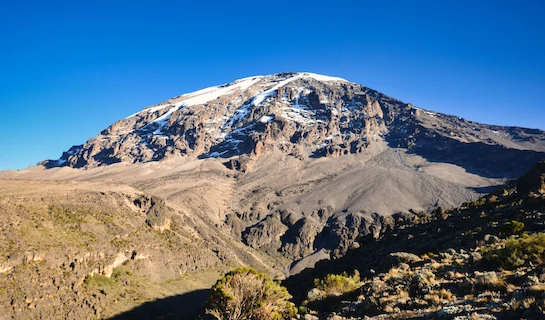
£2,770
5,895m
Grade: 1A/T4
12 Days With Flight
£2,450
5,895m
Grade: 1A/T5
9 Days With Flight